


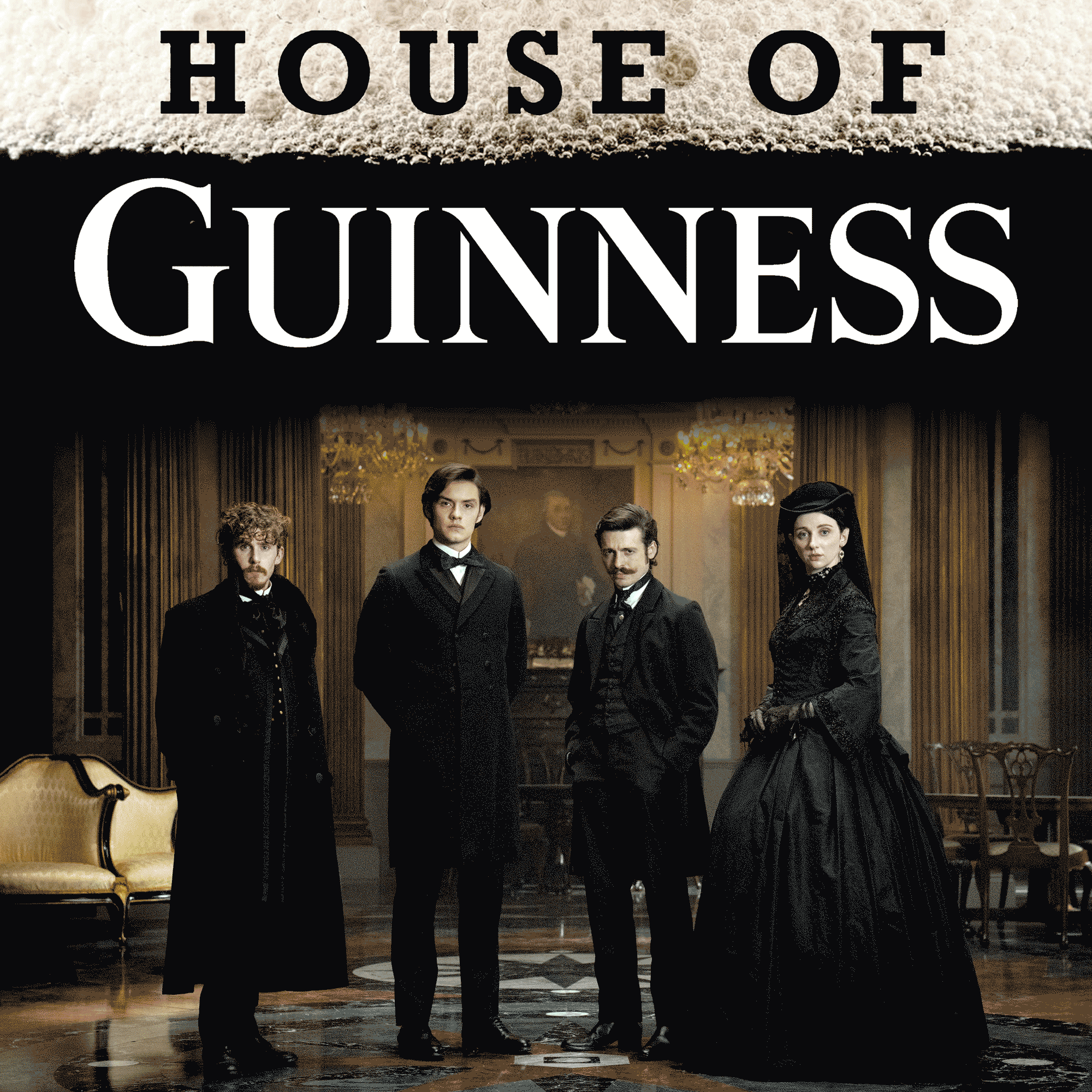
Come with us down the pub. This is our longest episode ever – which probably isn’t surprising given that we live in Ireland, the subject matter is close to home, and, yes, a few pints of Guinness helped lubricate proceedings.
In this episode of Reel History, we use Netflix’s House of Guinness as a jumping-off point to talk about something much bigger: Ireland in the long shadow of empire. Creator Steven Knight – the man behind Peaky Blinders and, of course, Who Wants to be a Millionare, I guess? – has put together a Victorian era melodrama that almost works as a standalone miniseries, even if it ends on a frustrating cliffhanger that’s clearly hoping for a second season that may never come.
We break down what the show gets right, what it gets wrong, and where it becomes aggressively ahistorical. House of Guinness prioritises sex, scandal, and drama over historical clarity – and that’s a valid creative choice! However, it doesn’t always feel like a choice, and at times the series falls short. For example, the rebellious “Fenians” are central to the story but hardly explained. Why are they so angry? Why are they willing to risk everything for independence? The show largely declines to answer, stripping away centuries of context and leaving viewers with the impression that Irish nationalism emerged out of nowhere. So we step in to fill the gap!
To understand 1868, we rewind and talk land theft, penal laws, cultural erasure, and a society systematically dismantled over centuries. We explain why the effects of British rule in Ireland aren’t “ancient history,” but rather still present today, and of course we have to touch on the Great Famine – or rather, the fact that there was no famine (in the way it’s usually presented). We unpack how starvation was weaponised as a policy and Ireland continued to export food under armed guard while its population died. When House of Guinness gestures vaguely toward “the poor” without reckoning with why that poverty exists, it muddies the central conflict it’s trying to dramatise.
But we also chat about more cheerful topics, like beer! Starting with the first (of many) Arthur Guinness, the empire built by Benjamin Guinness, and the four heirs wrestling with money, power, and loyalty in a country on the brink of rebellion. We trace the Irish Republican Brotherhood, the currents of resistance beneath polite society, and follow those threads forward toward 1916.
Jaysus, we’ve quite a bit to get through, don’t we? And no wonder, because this is a conversation about how Irish history is framed, caricatured, or avoided on screen, and why that still matters. If you want to focus on drama instead of history, fair enough – but if you’re going to set a story in colonial Ireland, you need to understand the fire you’re brewing beneath the stout.
Pull up a stool. Wait for your pint to settle. And let’s talk about Ireland.
Podcast: Play in new window | Download
Subscribe: Apple Podcasts | RSS

